Reconcile benefits faster.
Launch EDI in 30 days.
Tabulera automates benefits reconciliation and EDI connectivity for large employers — fully insured and self-funded.
Two problems. One platform.
Tabulera is built for employers who have outgrown manual benefits reconciliation and enrollment processes — it saves time, prevents premium leakage, and keeps benefits data accurate.

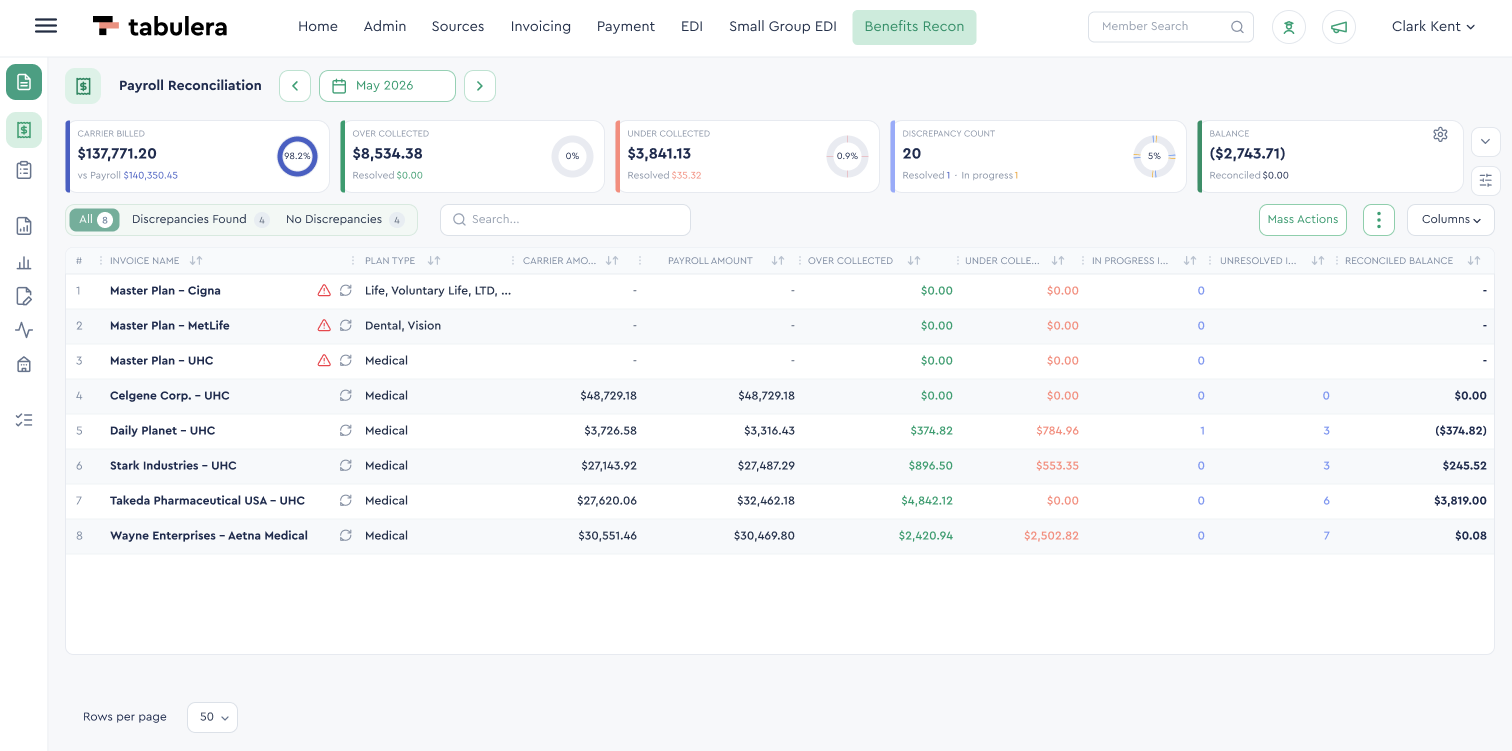
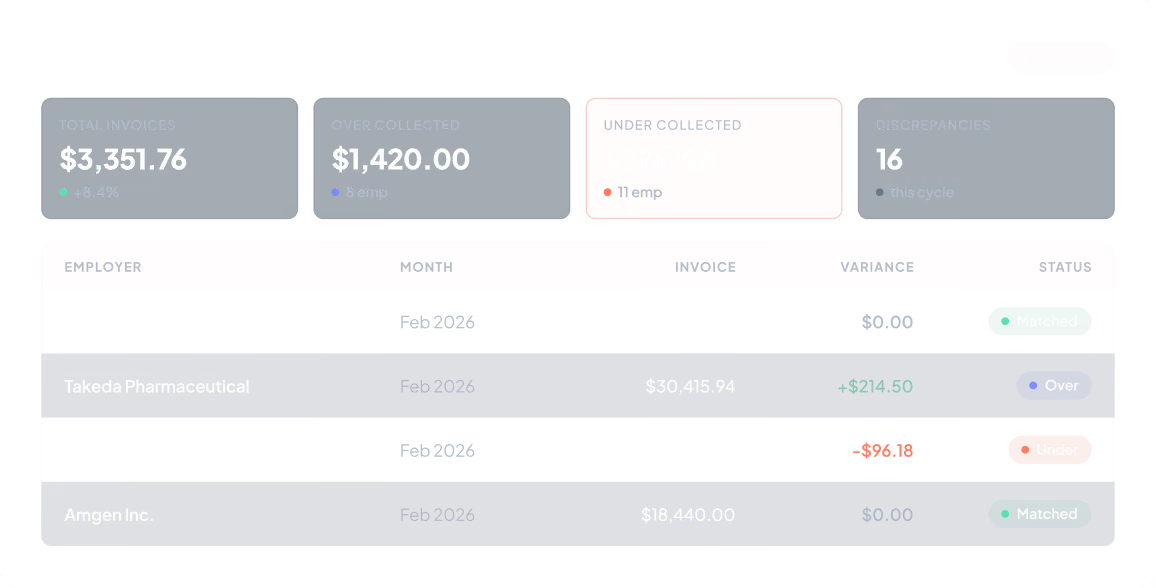
Your benefits team stops rebuilding spreadsheets every month. Carrier invoices are matched against your enrollment, payroll, and COBRA data automatically, every variance is flagged and categorized — and finance gets an audit-ready report in one click.

No more chasing carriers or pulling IT into file mapping. Your feeds go live in under 30 days, and when an employee asks “am I covered?”, Member Search answers straight from the EDI file — no carrier phone tree.
Most enterprise HR software stops where benefits get expensive.
Recruiting, onboarding, enrollment — covered. Whether carriers bill accurately and claims pay for the right people — that's where Tabulera lives.
What Tabulera helps prevent
Bad reconciliation doesn't announce itself. Overbilled lines just keep billing, and each unchecked invoice locks in another month of loss you'll never claw back.

HRIS, carrier, payroll: three systems, three answers. Once rates and rosters drift, every renewal negotiation and budget forecast is built on numbers nobody trusts.

A dropped or drifted EDI feed means the carrier's records and yours quietly diverge. The employee finds out at the worst possible moment — at the doctor, mid-claim.

When discrepancies surface in an audit instead of a monthly recon, you're explaining years of variance with no paper trail — and the refund windows that could have made you whole expired long ago.

Core Capabilities of Our Enterprise HR Software
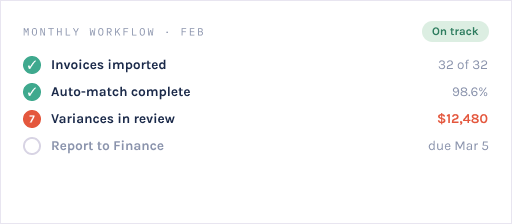
A structured workflow your team can follow every month - instead of spreadsheets, sticky notes, and carrier phone calls.

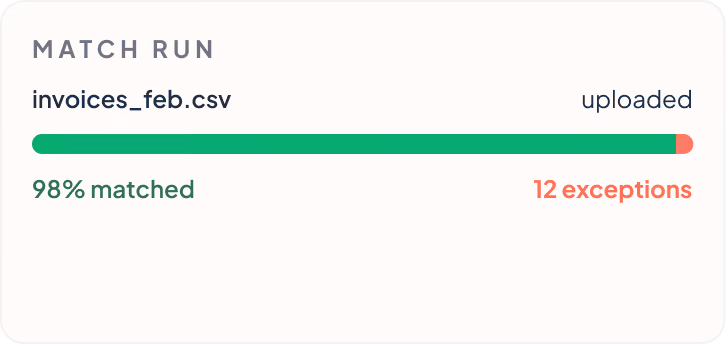
Upload invoices. Tabulera does the rest.

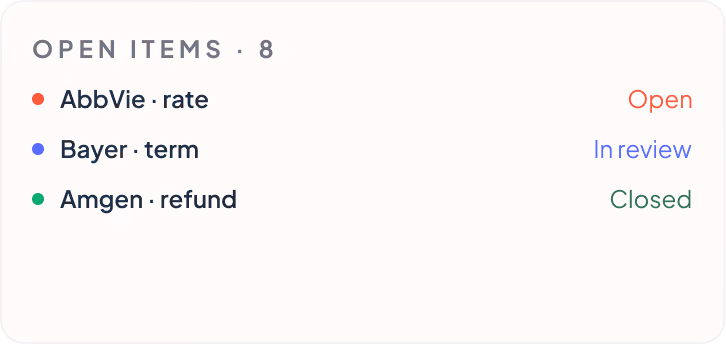
Every discrepancy tracked until closed.

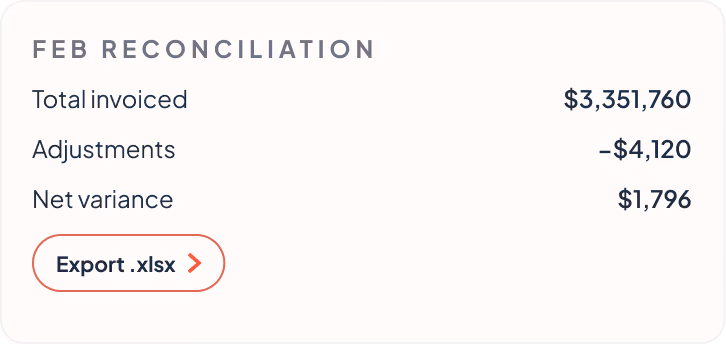
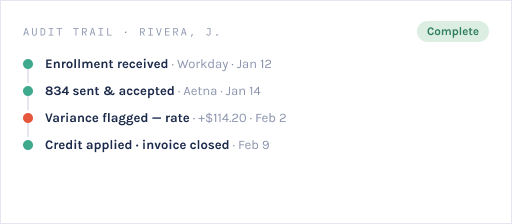
Every cycle documented and shareable.

Tabulera handles it all.

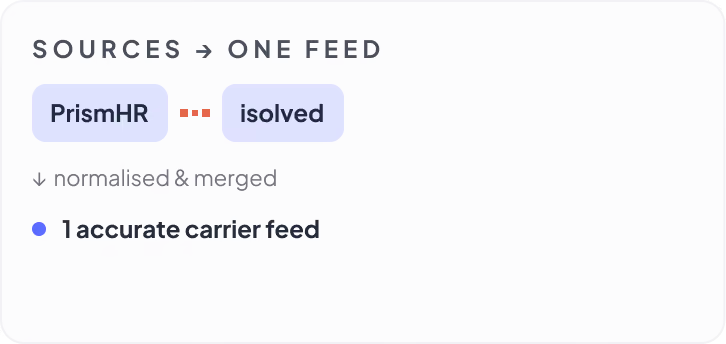
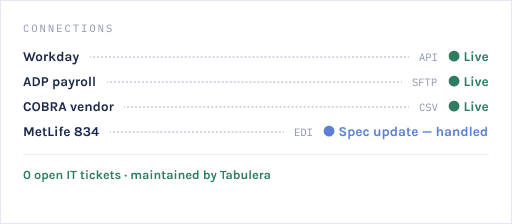
Multiple platforms. One carrier feed.

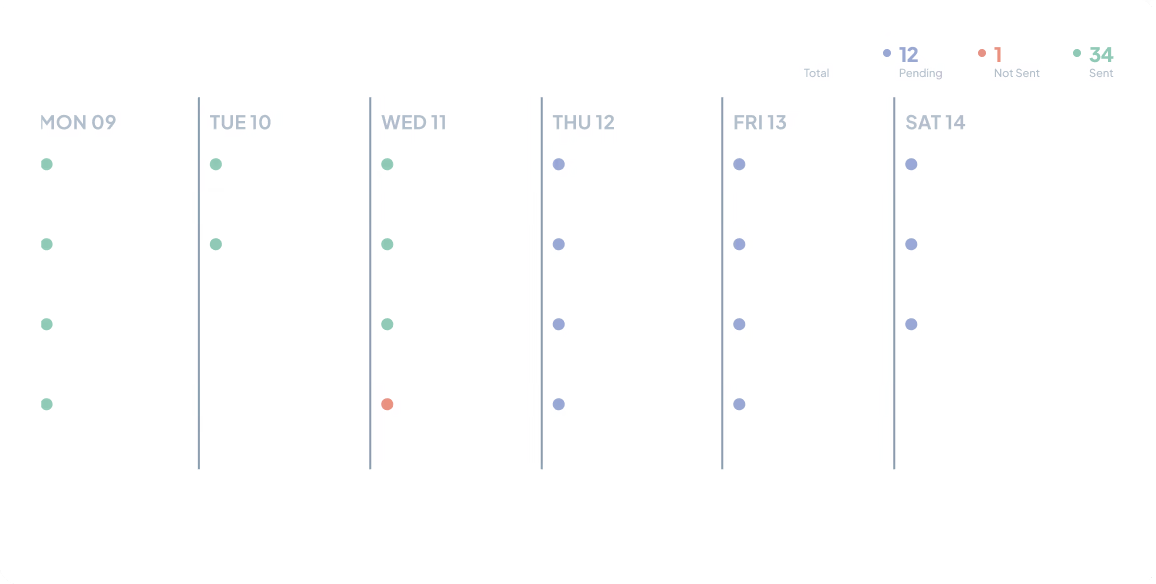
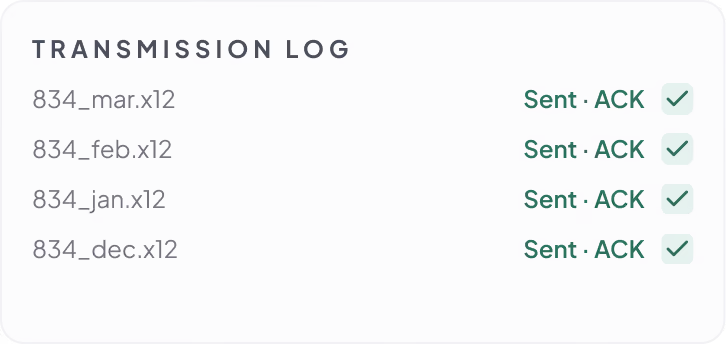
Know what was sent and received.
Why Enterprises Choose Tabulera
We unify enrollment, payroll, and carrier data, run automated Benefits Reconciliation against every invoice, and manage your EDI 834 feeds end to end — so benefits, finance, and IT all work from the same source of truth.
One source of truth for every team behind employee benefits.
We unify enrollment, payroll, and carrier data, run automated Benefits Reconciliation against every invoice, and manage your EDI 834 feeds end to end — so benefits, finance, and IT all work from the same source of truth.

Replace disconnected spreadsheets with a repeatable workflow, clear variance tracking, and reliable reporting to Finance.

Move carrier connectivity off the IT backlog — connect any HRIS or data format while Tabulera manages carrier changes.

Trace every EDI transmission, variance, adjustment, and resolution from source data through invoice close — without chasing spreadsheets.

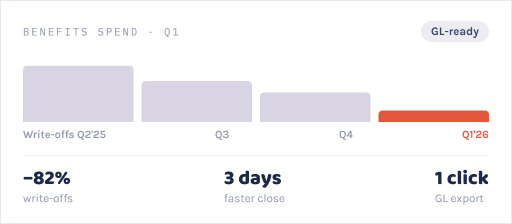
Control benefits spend with fewer write-offs, faster close, and clean, GL-ready reporting.
How Enterprises Improve HR Operations with Tabulera
Frequently asked questions
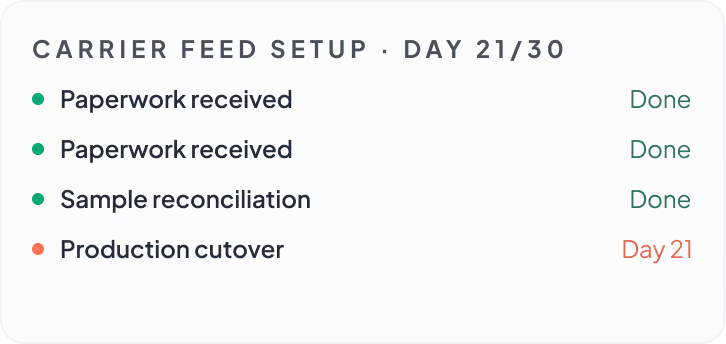
Reconciliation typically goes live in weeks. EDI feeds go live in 30 days per carrier — compared to the 6-month industry norm.
Yes. Self-funded reconciliation is a fundamentally different problem than fully insured — we match enrollment across HRIS, TPA roster, and stop-loss file rather than against a premium bill.
Tabulera's HR enterprise software exports reconciliation results, invoice summaries, and variance reports in formats your human resources and finance teams can drop straight into the GL — Excel, CSV, or system-specific outputs.

Clean EDI 834 feeds mean carriers have accurate enrollment data, employees actually have coverage when they need care, and your benefits team isn't fielding access-issue calls. Bad EDI feeds produce the opposite: inaccurate billing and, on self-funded plans, claims paid or denied for the wrong people.


For fully insured plans, undetected billing errors typically run 1–2% of premium spend. For self-funded plans, exposure is bigger — claims are paid directly, and stop-loss carriers can deny claims for members whose enrollment was never properly established.
Two specific problems for large employers: benefits reconciliation (matching carrier invoices to payroll and enrollment data) and EDI connectivity (getting 834 feeds live and keeping them clean). Both are usually handled by spreadsheets and manual coordination at the enterprise level — and both are where money quietly leaks out.